 EMDR Flow
Guide
Guide: what to rehearse in each phase
An EMDR training simulator should make decisions observable. It should let you state what you would do, show how a virtual case responds and explain which part of the training logic your choice touched. A linear protocol quiz tests recall; simulation is useful when it exposes the point where you would pause, gather missing information or change course.
The standard EMDR protocol has eight phases, but one exercise does not need to pretend to teach all of them at once. A sound simulator makes its scope clear and connects each exercise to accredited teaching and human supervision.
Phase 1: history and treatment planning
Practice should make you organize the available history, notice what is missing and build a target plan without rushing toward processing. The learning target is the reasoning behind where to begin.
Phase 2: preparation
A useful scenario tests readiness, explanation of the process, stop signals and resources. It should allow a decision to return to preparation when the fictional case is not ready to continue.
Phase 3: assessment
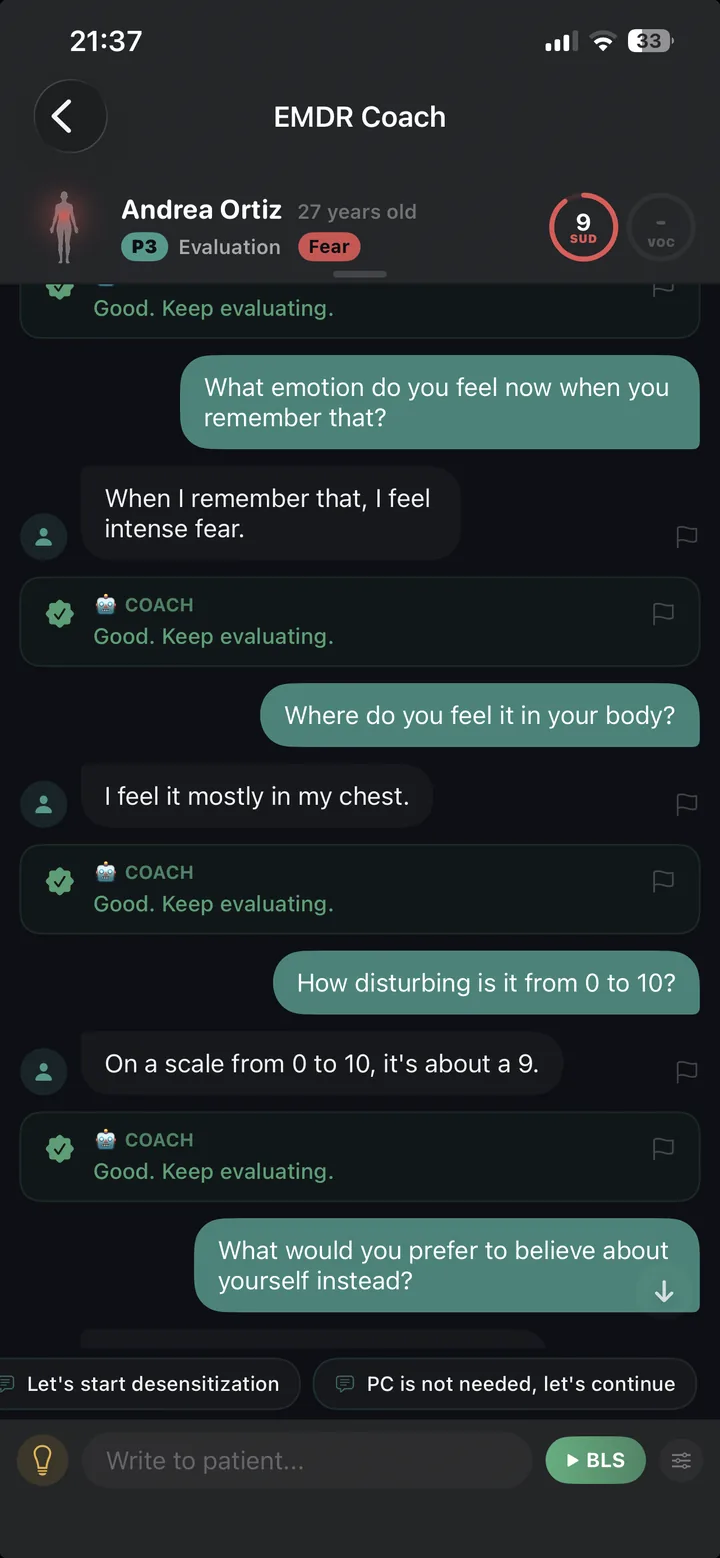
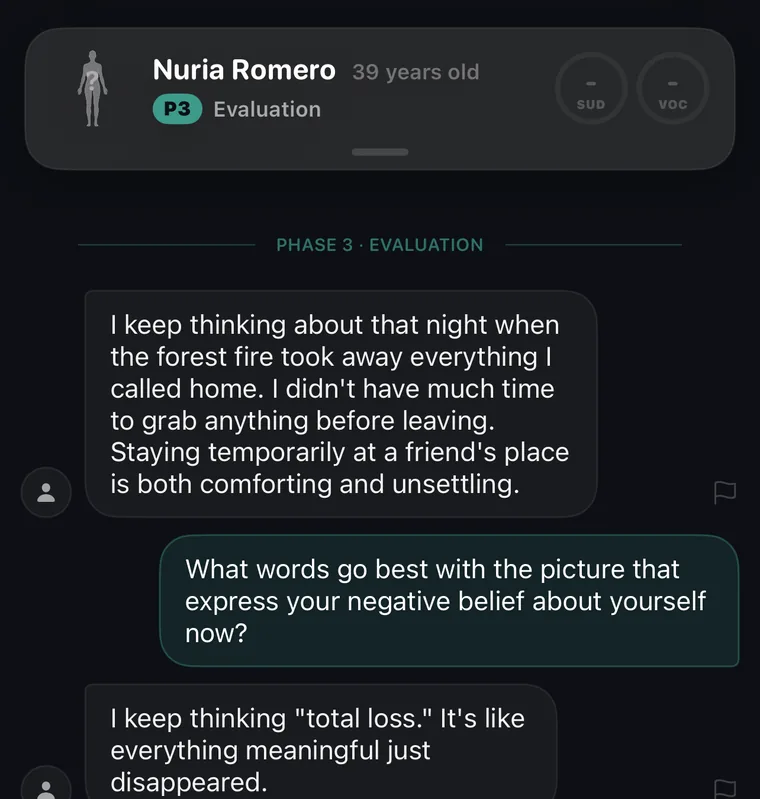
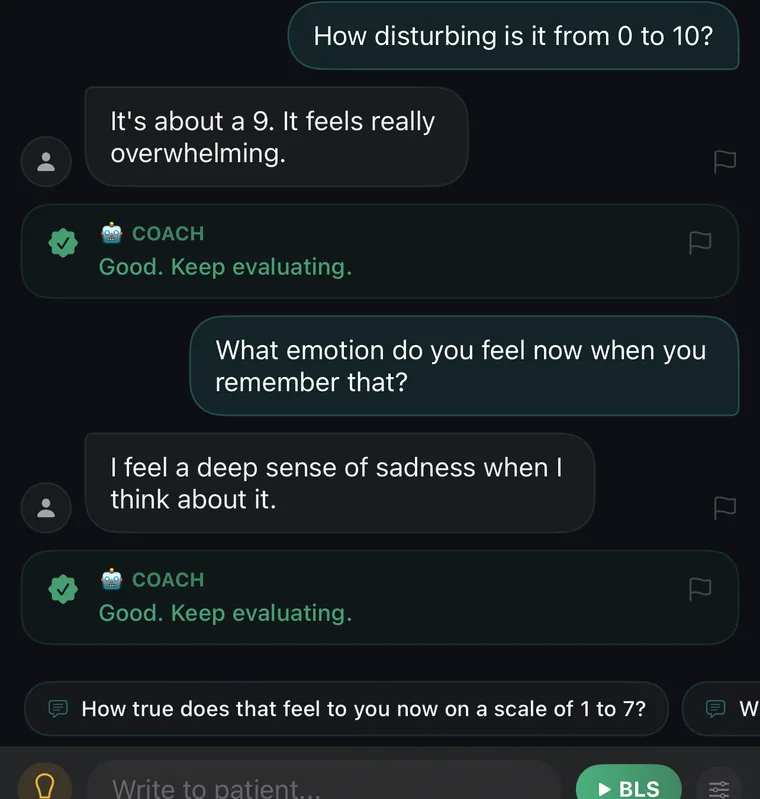
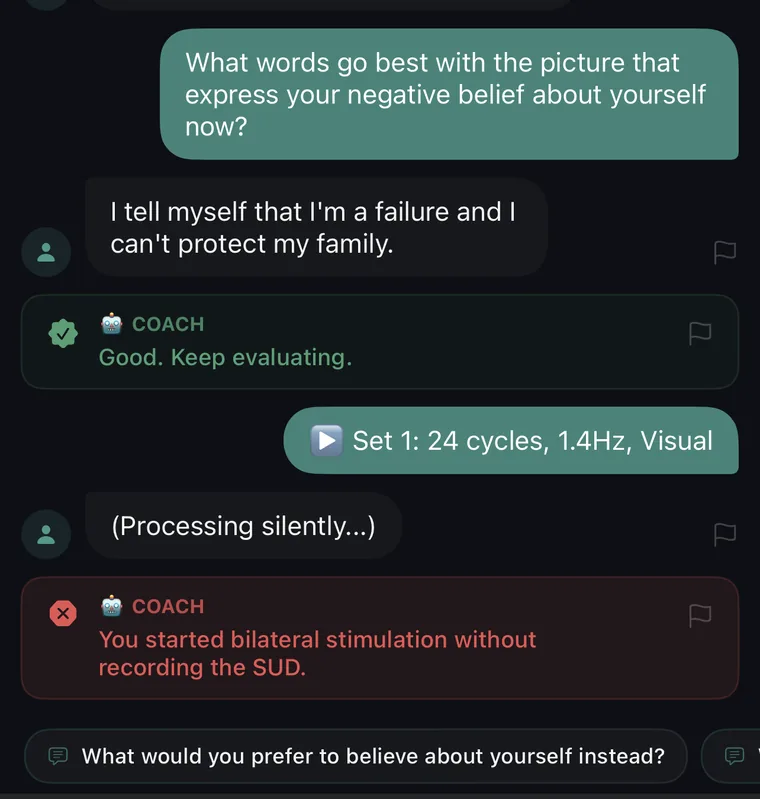
This phase lends itself to deliberate practice because its elements are observable: target image, negative cognition, preferred positive cognition, VOC, emotion, SUD and body location. A simulator can flag a missing baseline or an imprecise cognition close to the moment it happens.
Phase 4: desensitization
Training cases can create pauses, rising activation or blocked processing and ask you to choose among plausible actions. The software should distinguish a protocol checkpoint from a clinical judgment that belongs in supervision.
Phases 5 and 6: installation and body scan
These exercises should preserve the distinction between strengthening a relevant positive cognition and checking for residual body sensations. They should not force a predetermined result simply to complete the scenario.
Phases 7 and 8: closure and reevaluation
Closure must cover both complete and incomplete processing. Reevaluation is longitudinal: it belongs to a later encounter and should examine what has changed rather than act as a final quiz screen.
How to evaluate the feedback
- It identifies the action and the protocol element under discussion.
- It separates a missing step from a debatable clinical formulation.
- It explains the boundary of the scenario instead of presenting a score as competence.
- It gives you a useful question to take to a qualified supervisor.
Try a virtual-patient training case
EMDR Flow currently lets you practise target assessment and processing decisions with virtual cases and immediate feedback based on the app's training logic. It is an educational aid for appropriately trained professionals, not accredited clinical supervision or certification.
Use simulation between human learning moments
A practical sequence is accredited teaching, a focused simulation, written reflection and qualified supervision. Repeat the exact decision that caused uncertainty. Avoid entering identifiable client material; use the fictional scenarios supplied for training.
Frequently asked questions
Can an EMDR simulator replace accredited training?
No. A simulator can support repetition and reflection, but it cannot provide accreditation, observe a real therapeutic relationship or replace qualified clinical supervision.
Should an EMDR training simulator cover all eight phases?
A complete curriculum should address the purpose and decision criteria of all eight phases. Individual exercises can deliberately focus on one phase or transition, provided their scope is explicit. The EMDR Flow Coach currently focuses on Phase 3 assessment and processing decisions.
Can I choose which virtual patient to practise with?
No. The Coach assigns a fictional case at random from its library and skips cases you have already seen.
Is AI feedback the same as clinical supervision?
No. AI can compare an action with a scenario's training logic and flag a possible omission. Accredited supervision adds responsibility, context and professional judgment that software does not have.
How much does the EMDR Flow Coach cost?
EMDR Flow is a free download. The Coach is part of Flow Pro, available as an annual plan with a 7-day free trial or as a weekly plan. Prices vary by country and the App Store shows the exact price before you subscribe.